About Harriet
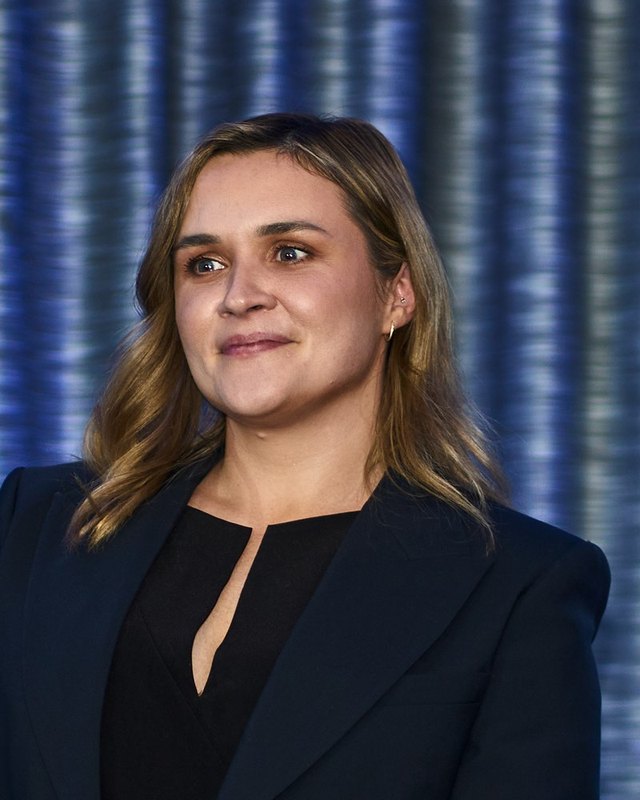
Dr Harriet Goodrich
Lecturer in Fish Physiology, IMAS, University of Tasmania
I am a comparative and environmental physiologist interested in how fish work, and what changes when their environment does.
My research focuses on the physiological mechanisms that shape growth, performance and resilience, particularly digestion, metabolism, acid-base balance and ionoregulation, and how these are altered by fishing, warming and other environmental pressures.
My path into physiology started during my undergraduate degree at the University of Queensland, where I volunteered on research into crocodile diving physiology. I completed my Bachelor of Science through a final year at the University of Bath in the UK, where I studied biochemistry, before returning to Queensland for Honours research on swimming performance in native freshwater fishes of the Murray-Darling Basin. Working with the NSW Department of Primary Industries and the Threatened Species Recovery Hub, I tested whether commonly used solutions for human-made barriers actually helped native fish move through them.
I stayed on as a research assistant, working across fish passage and the acid tolerance of frogs from Wallum wetlands, before receiving a QUEX scholarship for a joint PhD between the University of Queensland and the University of Exeter. My PhD moved me into aquaculture physiology and, working in partnership with Ridley Aqua-Feed, I studied how digestion, acid-base balance and ionoregulation influence fish performance.
That work sent me down a fairly permanent rabbit hole into digestive physiology. I became interested in the gut not simply as somewhere food is processed, but as a metabolically expensive and highly regulated organ system that can shape how much energy a fish has available for growth, activity and coping with environmental change. That interest also took me to Vietnam, where I worked on air-breathing fishes and cannulated my first swamp eel.
I then started with the University of Tasmania, and took about a year largely away from research in a teaching-intensive academic role. That period gave me time to work out what sort of research group I wanted to build, what kinds of questions I wanted us to ask, and how I wanted students to be trained. In 2024, I established the Goodfish Lab at the Institute for Marine and Antarctic Studies at the University of Tasmania.
The lab is built around experimental biology. We use physiology to understand how fish respond to fishing, environmental change and the demands of aquaculture, with work spanning wild fisheries, conservation and production systems. Much of our research is based in lutruwita/Tasmania, where rapid ocean warming, heavily exploited fisheries and a large aquaculture sector make it possible to ask questions that are locally important but have much broader relevance.